Getting Back to Business

The entrance to Canada's Parliament Hill in Ot...

The entrance to Canada’s Parliament Hill in Ottawa, Ontario. (Photo credit: Wikipedia)

After several years of posting regularly about literary events in and around Ottawa, it was time to take a break. The news was to be taken over by another writer, but things happen. So, a bit later this month, you’ll start to see those posts again right here. Every two weeks, starting around the 18th of August.


To get into the habit again, I thought I’d post something I wrote awhile ago to help a fellow poet with some ideas on where and how to find a mentor.  Public Library in Provincetown, Massachusetts

Most of the links are for Canadian sites, but there are two from the U.S. One is the University of Wisconsin, the other the Fine Arts Work Center in Provincetown, MA.

Here’s what I wrote to her about my own experience:

First of all I took some day workshops, then online via community colleges in Ontario (Algonquin College) then one through Stanford in 2010 that was 10 weeks long, combining writing prompts, online chats, feedback both from the instructor and other students.

That was how I connected with Canadian-American poet, James Arthur, who in 2012 invited several of his former students to a writing workshop in Lenox Mass. This took place again in 2014, although I was not able to attend for the second one. You can read some of James’ work at the Poetry Foundation, here: http://www.poetryfoundation.org/bio/james-arthur#about

treereadingserieslogoThen there is the Ottawa poetry series, Tree Reading Series, which has brought well-known Canadian poets to the area for master workshops on three occasions. That is where I was able to work with Roo Borson, Barry Dempster and John Barton.  These were two- or three-day weekends, absolutely amazing intensives with three wonderful mentors. Tree also features short, free workshops before each of their readings events, which take place the second and fourth Tuesday of each month, except for July and August. (And only once in December.)

The third method is to find a poet who offers mentoring/editing services. Through my Canadian Authors Association membership, I was able to take advantage of discounted rates to work with Bernice Lever and Harold Rhenisch, each for several poems.

In 2013, I asked Stuart Ross to mentor me. He offers services by the session, or five sessions for a discounted price. I sent him the last batch of poems this June for review. He reads and comments on the poems, offers editing suggestions, poets I should read, poets my work reminds him of, what he likes in my poems, what doesn’t work, and places to consider submitting. This happens in a one and a half to two hour phone call. He also has a short “Poetry Bootcamp” workshop that travels to different locations and well worth taking. Stuart blogs here: http://bloggamooga.blogspot.ca/

So, the routes to mentoring that I’ve taken are via short workshop, paid mentoring, and longer courses.

If you want to do a one-on-one mentorship, check out this link at League of Canadian Poets: http://poets.ca/links/manuscript-readers/

There are a lot of courses online. Some are free. Some are not. There are some I’ve been considering over the last few years but haven’t yet taken the plunge.

U of Wisconsin has two, each $160, which is a good price. Here is the link to one, which also contains info on the other: http://continuingstudies.wisc.edu/lsa/online/writing/poetry.htm

I’ve looked at the intensive workshops here at the Fine Arts Work Center, Provincetown, esp. Carolyn Forché’s course : http://www.fawc.org/24pearlstreet/workshops_new.php?filter=3

English: Carolyn Forche, Miami Book Fair Inter...

English: Carolyn Forche, Miami Book Fair International, 1989 (Photo credit: Wikipedia)

There are a lot of good Canadian courses: http://www.ccwwp.ca/creative-writing-programs-in-canada/ shows a few of them.

http://www.extension.ualberta.ca/course/EXGEN/3407/

http://www.viu.ca/crew/maturestudent.asp

http://www.banffcentre.ca/writing/programs/

http://www.sagehillwriting.ca/

AND AHA!  Here is a comprehensive list of schools offering writing courses, searchable by province:  http://www.canadian-universities.net/Universities/Programs/Creative_Writing.html

There’s a link at the bottom of the page that will get you to Community College courses, also by province. Not sure if you have to re-search within that to get to writing courses or whether it retains the filter from your original search to find university ones.

I hope this gives you some idea about where you might want to start. And if you want more info, I am always happy to help out if I can. Leave a comment on the blog with your contact information.

Carol A. Stephen, August 13, 2014


Salute to Poetry and to dVerse on its 3rd Anniversary!

It’s been awhile since I posted due to some health issues causing difficulty typing, but the weekly (or perhaps bi-weekly) newsletters from CAA will be back in August.  Meanwhile, I wanted to say congratulations to dVerse on its 3rd anniversary. Even though I don’t post there often, I do follow the blog and I save the posts!

Yesterday I came across an old sonnet I wrote that says a bit about what it’s like being a poet. This one is about a male poet, but of course can be applied to female poets (with appropriate substitutions):


On Contemplation of the Muse

Hungary-0064 - József Attila

Hungary-0064 – József Attila (Photo credit: archer10 (Dennis))


In shadow sits a solitary man,
in pensive contemplation of his muse.
He writes sweet poetry because he can
with clever words beguile and yet amuse.


A simple turn of phrase he will infuse
with dulcet undertones of wit and rhyme.
No lady ever born has yet refused
a poet spinning words three-quarter time.

Statue of Phillis Wheatley

Statue of Phillis Wheatley (Photo credit: Sharon Mollerus)

To win a heart with words can be no crime.
But poets walk alone in mighty crowds,
hearts beating cadence to a different chime,
while heads are often floating in the clouds.

The price is high for those who live to write:
The muse seeks succor day or dead of night.

Carol A. Stephen


Giardino dei Boboli, Firenze, Italy.

Giardino dei Boboli, Firenze, Italy. (Photo credit: Wikipedia)

And then I was thinking about the lovely photo of the place where dVerse is holding its celebration today. The Pitti Palace, with its lovely Boboli Gardens in Firenze, Italy. I was lucky enough to visit Italy and the Pitti in August 2001 with my late husband. John had been a Renaissance buff for many years, having lived in Firenze when he was a young man.


But to salute dVerse: This is a great blog that presents poets with ideas and challenges to keep the poems coming, whether it is to write a sonnet, or a poem about family history, or an ode to poets and poetry. Congratulations, dVerse! My poem here is about the wonderful venue you’ve chosen for the Poets’ Ball.


Amidst the Soaring Cypresses


I teased my husband when he’d talk
about the Boboli, pretend he’d said
Bubbly and I’d ask about fountains
how many, what statuary, how tall the trees
behind the Pity Palace? Ah, yes the Pitti, sorry.

In 2001, there we were, amidst soaring cypresses,
the grids of green grass and dark shrubs with waxen leaves.
Hot that day. In the sizzle of 37 Celsius, I dreamed of dipping toes
into Neptune’s Fountain of the Fork, settled instead on the long walk

see filename

through groves of trees and the shadows of Spiders Lane,
shuddering at the thought of eight tiny legs crawling up my own.
We took pictures of The Dwarf Morgante, the giant stone tub and
statue after statue that still loom and gesture in their frozen poses.

Tomorrow, the Poets Ball at Boboli. I will dance alone among the trees
for the memories of the gardens, the stone figures, and of him.

Carol A. Stephen
July 16, 2014

The back facade of Palazzo Pitti in Florence a...

The back facade of Palazzo Pitti in Florence as seen from Boboli Gardens. גני בובולי (Photo credit: Wikipedia)

Writing Process Blog Tour with Simone Muench

In March I participated in the blog tour on Writing Process. Today I discovered this one by a poet who’s published a book and has a chapbook forthcoming using the cento form, which I love. I wanted to share this one with others who might read my blog. Carol

Editor's avatarJFR Blog

Welcome to the Writing Process Blog Tour!MillsCompHi.indd

I’d like to thank Tyler Mills for so graciously inviting me to participate.

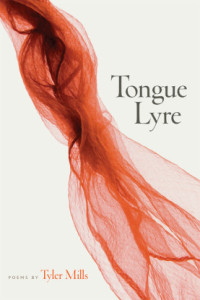
Tyler Mills is the author of Tongue Lyre, winner of the 2011 Crab Orchard Series in Poetry First Book Award (SIU Press 2013). A poet and essayist, her poetry has recently appeared or is forthcoming in Blackbird, The Believer, POETRY, and the Boston Review, and her prose has appeared in the Robert Frost Review and the Writer’s Chronicle. Her poems have received awards from the Crab Orchard Review, Gulf Coast, and Third Coast, and she has been the recipient of work-study scholarships from the Bread Loaf Writers’ Conference and the Vermont Studio Center. A graduate of Bucknell and the University of Maryland (MFA, Poetry), she is Editor-in-Chief of The Account: A Journal of Poetry, Prose, and Thought. She lives in Chicago, where she is currently working…

View original post 1,519 more words

The First Experimental

Due to a technical glitch, it looks like this post was deleted, leaving only a “Second” experimental poem. The experiment was to take a short poem or several orphan lines with nowhere to go, and from there do some free-writing or wild-writing based on the first lines to see where it leads. I’ve been working with Lewis Oakwood on this as-yet-unnamed form.  It is an inversion of the usual way of free-writing first, then editing down. Here is the first attempt:


LINE EXCAVATIONS, ARCHAEOLOGIES

I.

It’s not about the tremble on your tongue
It’s in the taste of mountains
the colour of wind
the bitter voice of herbs
the texture of air
the tremor of red stones

II.

Imagine a mountain taste: salt, bitter, earth taste

pyrite

pyrite (Photo credit: Wikipedia)

a hint of old sock and worm perhaps mold
the metallic iron nuances of fool’s gold, mint, almond
a trickle of fresh melt and shell

Imagine. What is the colour of wind? It pulls blue from the air
folds it into white filtered through smog and rain
from the west it shatters into grey, white from the south and north
marine blue moving west from the east coast of Greenland and
when it rises upward fades into black and stars

Imagine you hear the bitter voice of herbs. Is it a low mutter gutteral
or a high clear C-note above sound? Does it resonate?
A bounce-back beat a staccato stack of jazz riff searching for a melody
or a thrum drum hum just north of subsound— does it incline, lean, a little hot
and mean, toward a little subterranean Mediterranean Latin lilt tilt?

imagine the texture of air, a lightweight seersucker suit, a mixed brew of scent
and twinge, eau of meadow and l’air du city smoke, a soupçon of cloud, sieved
through a fine mist of rain, snow and fresh with fragrance of sun.

English: Ayers Rock, Uluru, Australia Deutsch:...

English: Ayers Rock, Uluru, Australia Deutsch: Ayers Rock, Uluru, Australien (Photo credit: Wikipedia)

I’ve seen the tremor of red stones.
How they tremble at the clap of thunder,
huddle together under harsh storm. Each shiver
a glimpse of glint on rounded shoulder, lined
with spidery veins of silver and gold granite,
but though they tremble they will not break,
and they will never let you see their heart.

Carol A. Stephen
May 8, 2014

Enhanced by Zemanta