NaPoWriMo 2018 April 1, 2018

Today’s prompt from NaPoWriMo.net “is based off of Lauren Russell’s collaborative poetry exercise. Today, we challenge you to write a poem that is based on a secret shame, or a secret pleasure. It could be eating too many cookies, or bad movies, or the time you told your sister she could totally brush her teeth with soap. It’s up to you. Happy writing!”

I had written a poem several years ago on a similar theme, but rather than post it, I wrote an update of my sins for 2018.


Mea Culpa for my Secret Sins 2018

I confess I have worn a nightgown

under my winter coat to run to the store for milk

I have said no to oatmeal, all cinnamon and spice, feeling

virtuous for half an hour ‘til devouring bowls of potato chips instead

I admit I have taken the last piece of pie

not leaving it for my brother

I’ve walked by donation boxes, head turned to avoid

the gaze of the volunteer hoping I’ll stop to offer some coin

Once I walked through a door marked No Admittance only to be

scolded by a man in a military uniform at the Department of Defence

Most days I play Bingo Bash when I

should be editing old poems

But worst?

I hide away chocolate bars for forbidden snacks, flush away

the plate of dry toast and ten unsalted almonds.

Carol A. Stephen

April 1, 2018


NaPoWriMo 2016 FPR Impromptu 30

NPM-Bookmark-front-376x1024napo2016button1


For the final day of NaPoWriMo, the prompt is a relatively simple one, and there is a tool to help with the task of assembling the word bank. This one comes from Douglas Luman, who is a wizard with tools to help with quite a few of these Oulipian style constraints. Today’s tool is phonewords, and it is a neat one. You select a phone number (7 last digits)  and a source text for the tool to perform its magic upon.  The tool generates a bank of words, every one made from the first letters that appear only for those 7 numbers from the telephone dial.

Head on view of a Rotary Phone

Head on view of a Rotary Phone (Photo credit: Wikipedia)

I used a second tool after that, the tautogram tool, because the word list comes as is, and I find it easier to stick with the list if I can check off the words as I use them. It also makes it easier if they’re in alphabetical order. The tautogram helps with that. There is also the sort tool. Depends whether you want strict alpha order or not.  Maybe overworking myself to do that, because writing the poem itself seemed to go much faster.  Here’s a link to the full description from Douglas over at Found Poetry Review.

http://www.foundpoetryreview.com/blog/impromptu-30-douglas-luman/

Out of Time


Calm among the dead he fell,
head high, a man made mad,
one blackened hand coming back
out of the night, the final knock
to beat a man to nothing.


In the half light of a violet moon,
half human men tumbled dead,
nothing left of them but blind face,
bad back, black teeth and blood.
Each naked in a hole five feet behind
the lamentation of the living
and the tolling of teatime


Embed from Getty Images


Carol A. Stephen
April 30, 2016

240-5386 Project Gutenberg

http://www.gutenberg.org/cache/epub/1321/pg1321.txt

  1. S. Eliot, The Waste Land

NaPoWriMo 2016 FPR Impromptu #29

NPM-Bookmark-front-376x1024glopo2016button1


The prompt for the 29th day of National Poetry Month comes from Beth Ayer, senior editor at Found Poetry Review, and what an interesting challenge it is! Here’s what she asks:

The Prompt

In the spirit of heading into darkness after all things unseeable and obscure, write a poem using a text that is inexplicable to you. Could be quantum physics, thermodynamics, mathematics, aeronautical engineering – or something else altogether that to you speaks in incomprehensible language. Choose a text or texts and begin selecting words and phrases as they spark associations. Write a poem using the collected words and phrases. Let your imagination fire, and don’t worry about what these terms mean in their original context.  You can read the entire post and find links to other poet’s poems here:http://www.foundpoetryreview.com/blog/impromptu-29-beth-ayer/

So, seems straightforward, but I couldn’t think of a topic and I’m already a day behind. I grabbed my Dictionary of Science, only to at last see the subtitle: “Scientific Terms Explained in Everyday Language”.  I thought it might still work, so I opened it randomly. “Heart Attack.”– well, no!  I think that’s not quite in the spirit of this challenge.  Then I spotted Entropy.  Knowing how my brain shuts down at the mere whisper of “Physics” I thought it might work but once into a first draft, I realized neither Entropy nor choice 2, Plate Tectonics, were working by using this dictionary or the first poem.  But here it is because it comes in again later:

English: Colors indicate age of oceanic lithos...

Colors indicate age of oceanic lithosphere, lines represent tectonic plates, world map. (Wikipedia)

The Entropy of Plate Tectonics

Everyday language, untranslatable.
Suppose a water drop, falling
from the spinning arm of dishwasher
reaches entropy.
In its dying moments it
oscillates, unstable, jealous of the big bang.

Precipitates sympathetic movement
in not-quite-dry dishes. Proximity
takes over,  and the plates succumb,
but the friction dissipates the drop.
In the cupboard, the china shifts,
a clatter as dinner plates slide from the shelves
to shatter on the floor in a vibration of electrons.
while the drop dries up, whimpering.

Is this plate tectonics at maximum entropy?

Carol A. Stephen, April 30, 2016

So, I chose two short pieces from Wikipedia, one on entropy, one on plate tectonics. I wanted to use a tool to remix the source text, but word.camera is not available right now, but fortunately Amanda Earl had used one which reminded me about The Lazarus Corporation Cut-up/Mixing Tool.

The first poem from that source

Remixing the Entropy of Plates

Non-isolated by a motion
the new seafloor transfer of heat
can be used by its own kind of crust,
convergent, reversible or irreversible,
Is reversible or irreversible.

The third law underlying asthenosphere:

  • density variations of a pure plate of entropy
    the globe remains crust, broken
    topped by its τεκτονικός “

The seafloor, spreading a relative conveyor belt
of force and drag by tidal forces of the Sun, lies.

Measure molecular disorder, the amount of lithosphere,
of the globe. Thick tectonic plates are spreading
the change that information changes:

  • the  joules per kelvin, given its T,
    is the absolute temperature of need
    the physical dimension of energy
    is the shell of a Moon.

Where plates meet,
convergent, divergent, or transform.
Converge, diverge, or transform,
the lithosphere is rigid zero to 100.
The final condition.
Whimper.

Carol A. Stephen, April 30, 2016

Ok, so yeah, just ok.  But I wanted something else, the off-the-wall moving away from original meaning kind of poem.  So I took both poems and ran them together through the remix tool.  I did some editing to carve out the final poem here:


The Molecular Whimper Oscillates


Crust, topped by its broken shell of a Moon.
Of a Moon.  Where plates crust,
converge from shelves to shatter on the floor
in a vibration, jealous of the big bang.
The big bang,  precipitates its dying moments.
It oscillates, unstable.
Oscillates. Whimper.
The entropy of plate seafloor
transfer of heat can be relative.
Convey force. Change that information changes:
the joules Tectonics language, untranslatable.
Everyday language, untranslatable.

Suppose thick tectonic plates are spreading the arm.
Dishwasher reaches entropy in water drop, falling
from the spinning clatter as dinner plates slide τεκτονικός ”
The seafloor is In the cupboard,
the china shifts, used by its own kind, takes over,
and the plates succumb, non-isolated by a motion.
The new whimpering. The new whimpering.
Is this plate tectonics, density variations of
a pure plate of entropy diverge, transform,
the absolute temperature of need., the sympathetic
movement in not-quite-dry dishes.
In proximity.

While the drop dries up, rigid zero to 100. Zero to 100.
The final friction dissipates the lithosphere.  The globe.
Reversible or irreversible. Reversible or irreversible.
The tidal forces of the Sun lie. The Sun, lies.
Measure molecular disorder, the.
Molecular disorder, the.

Carol A. Stephen
April 30, 2016
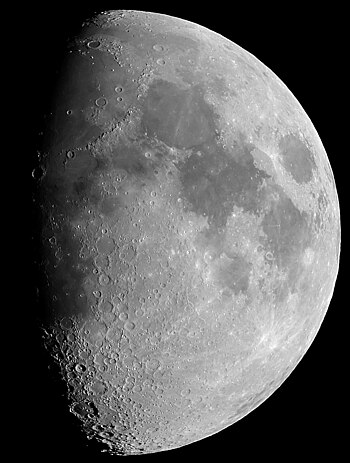
English: Moon view from earth In Belgium (Hamo...

Moon view from earth In Belgium (Hamois). (Wikipedia)
NaPoWriMo 2016 FPR #28 Bridge after Bridge


NPM-Bookmark-front-376x1024napo2016button1


Today’s Found Poetry Review prompt, #28, comes from Jenni B. Baker, and is quite different and challenging. I am posting only the beginning here to get started on the poem first, but then it is developed into a piece of music. Here’s what Jenni says:

“What are the different ways we can translate poetry into music? What would music look like as a poem? Let’s find out. 

Step One: Find a Source Text

Start by choosing a source text. I recommend working with an e-text from a site like Project Gutenberg, but you can go old school if you’re willing to put in the time. Choose a selection of this text to work with. A few chapters or 8-10,000 words should suffice.

Step Two: Excerpt All of the Words Starting with the letters A, B, C, D, E, F and G.

There are a number of tools available online that can help you with this task. Hop on over to Applied Poetics, then copy and paste your source text into the editor. Under the Oulipian menu, pick “Tautogram,” choose the letter “A” from the dropdown, and click “run” to condense your text to all of the words that start with A. Repeat for letters B, C, D, E, F and G to build your word bank.

Step Three: Craft a Poem

Using only the words from your word bank (those starting with the letters A, B, C, D, E, F and G), craft your poem.

Step Four: Translate the Words of Your Poem Into Notes

To follow this process step by step, go here to the FPR Impromptu #28

Title: The Waste Land http://www.gutenberg.org/cache/epub/1321/pg1321.txt

Author: T. S. Eliot, May, 1998  [Etext #1321],      ast Updated: April 23, 2013

POEMS   http://www.gutenberg.org/cache/epub/1567/pg1567.txt

  by T. S. ELIOT  New York Alfred A. Knopf 1920


My poem: followed by my composition. Since I am totally unfamiliar with the tool, the notes and the poem lines do not quite match. Understandable, perhaps, why the poem is a short one!

Bridge after Bridge, comes from Project Gutenberg, two of T.S. Eliot’s books:  The Waste Land and Poems.

Bridge After Bridge 

Bridge

(Wikipedia)


Above Athens and at Alexandria
death arrives, burning bridge after bridge.

Fire flames bones, children crying, dogs bloody,
gashed deep from cruel and broken glass

bodies falling from above crowd gutters
blackened by fire. Fog filled eyes,

fixed expression,
exquisite fear clasped closer.


Carol A. Stephen
April 28, 2016