Small Stone for Jan. 25, 2014

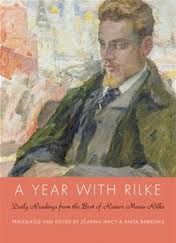
badge-14-300x300For Jan. 25, A Year with Rilke shares “The Beauty of You”, a 6-line piece from The Book of Hours II, 34.

AYEARWRILKE


My inspiration is the first line of the poem, although I move away from my sense of Rilke’s meaning to go with what this made me think about. The beauty that came to mind was that of words and poetry.

Jan. 25, 2014

“In deep nights, I dig for you like treasure.” From the Book of Hours II, 34 –Rilke

Which words will come
unbidden in effortless flow
when time is right?

English: Two owls among the palm trees.

English: Two owls among the palm trees. (Photo credit: Wikipedia)

What will struggle for birth
beneath wings of night birds
fledglings trying to fly…
 
–CAS

Enhanced by Zemanta

Small stone for Jan. 24, 2014

badge-14-300x300Today’s reading is an excerpt from a letter, rather than a poem. It ends with the idea that we are the “Transformers of the Earth”, yet the middle of the piece spoke more strongly to me, as I try, not very successfully, to transform myself.

AYEARWRILKE

Jan. 24, 2014

“Certain stars increase in intensity and extinguish themselves in the angels’ endless awareness.  Others move toward transformation slowly and with great effort, and their self-realization occurs in fear and terror.” –from A Deeper Reality, Letter to Witold Hulewicz, Nov. 13, 1925, A Year with Rilke

How did I grow so far
away from my emotions, where
I often cannot say how I feel,
not even whisper it to myself?

Each step away from fear like moving
through recurring nightmare:
running in place, freeze-frame motion,
the unknown about to overtake me

English: "The running woman" at the ...

and I wake.
But my thoughts continue
running, this time not away,
but toward—

–CAS

Enhanced by Zemanta

Small Stones for Jan. 22 and 23, 2014

badge-14-300x300Yesterday I was trying to fix my laptop (unsuccessfully!) and didn’t write a small stone, so today’s post is a two-fer.  The two selections somewhat respond to one another, I think. The first is titled If I Cried Out, and comes from the First Duino Elegy.  The second is Sing, My Heart, Sonnets to Orpheus II, 21.  Links to them are here: http://yearwithrilke.blogspot.ca/2011/01/if-i-cried-out.html

and here (scroll down to the second poem): http://www.windgrove.com/blog/two-poems-two-images/  

There are other translations where the wording may be different; I try to find ones that match A Year With Rilke. AYEARWRILKE

Jan. 22, 2014

If I cried out, who
in the hierarchies of angels
would hear me? –Rilke, the First Duino Elegy

Song of the Angels by William Bouguereau, 1881.

Song of the Angels by William Bouguereau, 1881. (Photo credit: Wikipedia)

If angels surround us waiting
for us to call to them, as someone
said the other day on Doctor Oz,
why do their answers elude us?

Or is theirs the other inner voice, muffled
by the loudness of our incessant questions,
our cries so frequent we can’t hear
the answers between the thoughts? 

–CAS 

Jan. 23, 2014

Whatever image you take within you deeply,
even for a moment in a lifetime of pain,
see how it reveals the whole—the great tapestry.
            –Rilke, Sonnets to Orpheus II, 21

In this moment, I am searching
for answers still hidden,
one great image of what it all means.

This is the unanswered question

In a knot.

In a knot. (Photo credit: Carbon Arc)

just beyond each knotted thought.
Which cord will unravel mystery?

–CAS
Enhanced by Zemanta

Small Stone for Jan. 21, 2014

badge-14-300x300For Jan. 21, A Year with Rilke offers “The Man WAYEARWRILKEatching (II)”  which suggests that our triumphs are over small things, and that this, in turn, “makes us small too.”

He goes on:

“The eternal and uncommon refuses to be bent by us.”

He then talks about wrestling with an angel, that even though we may be conquered, to have fought even so has strengthened us. The poem ends with these lines:

“…His growth is this: to be defeated
by ever greater forces.”–Rilke
At first, it sounded to me as if he was saying we cannot win the larger battles, and I thought about how easy it is sometimes to give up when things get tough. It gives us an excuse. We can’t say we failed if we didn’t actually try. Of course, that nagging little interior voice is later going to tell us differently. But abandoning a hard task seems easier at the time.

I think about how we bounce back again and again when we are fighting chronic illness. Each setback makes us want sometimes to just give up. And then from somewhere we find the strength and perhaps the courage to keep trying.

Jan. 21, 2014

“…His growth is this: to be defeated
by ever greater forces.”–Rilke

For years I watched you weaken
your body shrink to small, the slowing
of your heart, each backward slide
before your eyes closed one last time.

Country Road

Country Road (Photo credit: Wikipedia)

Twice when darkness came
I turned toward the light. Still,
there is fear: how many miles left
along this road?

–CAS

Enhanced by Zemanta