Quillfyre’s #Oulipost April 1, 2014

Ouliposter-Badge-Plum-300x300Today is the first day of National Poetry Month, and of the Found Poetry Review’s Oulipost Project. To start, I’ve quoted the first blog post from the site here:

Oulipost begins today!
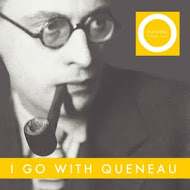
Queneau-300x300Every day this April, nearly 80 poets will write one poem per day by applying constrained writing techniques sourced from the Oulipo (Ouvroir de littérature potentielle — or “workshop of potential literature”) group to text sourced from their daily local newspaper. This is the first of thirty prompts in the Oulipost project.

Oulipost #1: Quote Cento

When composing a cento, poets take lines from existing poems (traditionally without any alterations) and patch them together to form a new poem. Today, create a cento using only quotes referenced in newspaper articles. For example, if a newspaper article contained the line “It was a tragedy,” commented Detective Smith, the line, “It was a tragedy,” would be available for you to use in your poem. While you can’t change anything within the quotes themselves, you may choose to break a longer quote in half or use just part of a quote as needed.

Variations:

  • Purist? Challenge yourself to write your cento using only complete quotes (sentences) as they appear in your articles.
  • Add an additional constraint by challenging yourself to use only quotes sourced from a single article, single newspaper page or single newspaper section.

So.  After spending three hours with my morning paper, I had chosen my quotes but to fit them together, allowed myself the option of being neither purist nor restricting to one article or section.  Here is my quote cent, with sources below. And yes, the title is a quote too:

“WHAT IS IT THAT WE ARE NOT DOING THEN?”

*
It’s been years since we’ve been this low
We’re just not achieving the results we need!
an enormous amount of cleaning to do

the spectre of reduced yields in key crops that feed humanity
He had no clue that his friend had gone to the dark side.
that’s part and parcel, goes with what happened.
The shock factor, the depressed, whatever state you want.

It’s everywhere you look, everywhere you go outside,
You could feel it a little bit.
But there is a sense of normal life.
Life for local people is going on.

All the shops are open.
People are walking in the streets
…some crops will do better.
Primary metals and oils and gas seem to be rebounding a bit.

These are tiny steps
there’s no experience like stepping into this ring and measuring yourself
I tried to come in with a smile

Carol A. Stephen
April 1, 2014

Sources quoted: All from Ottawa Citizen, April 1, 2014
• Kirkey, Sharon, Post Media News, Experts fear hospitals not clean enough A1 –A2, Zoutman, Dr. Dick
• Butler, Don C. difficile struggles continue A-2 Neill, Allison
• Weber, Bob Climate options melting away, A6, Smol, John, Pachauri, Rajendra
• Sylvester, Meggie The new language debate: Trudeau’s use of the F-bomb A-3, Trudeau, Justin
• Traikos, Michael, PostMedia News,The day the music stopped B6, Carlyle, Randy, Franson, Cody D’Amigo, Jerry
• Cobb, Chris, No clue friend had gone to dark side C1, Edelson, Michael
• Crawford, Bruce, Afghans upbeat, says U of O prof, Ottawa C1-C2, Banerjee, Ranjan
• Isfeld, Gordon Manufacturers hit higher gear, D1, Bill Ferreira

Enhanced by Zemanta

OULIPOST 2014 ASSIGNMENT #1 INTERVIEW

Ouliposter-Badge-Plum-300x300For National Poetry Month, I usually participate in one or more challenges to write one poem a day for the entire month. This year, I asked to join the Found Poetry Review’s Oulipost Project, and was accepted as a participant.

Oulipo, for those not familiar with the term, stands for short for French: Ouvroir de littérature potentielle, founded in 1960 by a group primarily of French writers and mathematicians. From Wikipedia is this explanation of the term  (rough translation): “the seeking of new structures and patterns which may be used by writers in any way they enjoy.”  http://en.wikipedia.org/wiki/Oulipo Oulipo writing uses existing forms of constraints, as well as creating new ones.

Over the month of April, we will be using a different constraint each day to create our poems, with all of our source material coming from daily newspapers.

For our first assignment, we have been asked to answer five interview questions. Here goes!

1. What excites you about Oulipost?

The opportunity it offers to push my boundaries. I often work in a rather safe little box.  Time to find what is on the other side of the walls!

2. What, if anything, scares you about Oulipost?

Of the 30 constraints we will use, I have used 7 of them before, heard of one other, and am completely mystified by the other 22. I hope I can keep up! Besides that, Found poetry scares me a bit because I am never quite sure whether I can later publish it or not. So I haven’t really tried.

3. Have you written experimental or found poetry before? If so, tell us about it.

I’ve enjoyed working with various constraints for my poems, especially through the prompts provided by the April writing challenges. Although I first encountered found poetry in 2006, in the last year or so I’ve used this technique much more frequently to create centos, for entries in the Geist Erasure Poetry contest and for assignments done as part of my online MOOC course, Modern & Contemporary American Poetry via UPenn. That introduced me to Dada poems, N+7, unoriginal writing, and other chance techniques as well as sound and visual poetry. I enjoy the challenge of working with these constraints. I’ve also managed a couple of good found poems from magazine articles.

4.  What newspaper will serve as your source text?

  I have set up a new subscription to the Ottawa Citizen beginning April 1st, just for this project.

5.  Who’s your spirit Oulipian?  

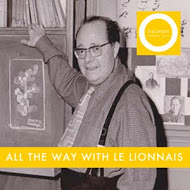
I am not yet familiar with the work of the group members, but I have used Tristan Tzara’s methods as well as Bernadette Mayer’s.  I find the work of Caroline Bergvall interesting too, and of course, being Canadian, Christian Bok, who gave us Eunoia. Over the next couple of weeks, I will do some research on Calvino, Le Lionnais, Queneau and Perec, with the idea of choosing one of them as my spirit Oulipian.

Calvino-300x300

Perec-300x300

Enhanced by Zemanta
Queneau-300x300Le-Lionnais-300x300

NaPoWriMo Prompt for Day 30

napo2013button2

Technically, it is the last day of National Poetry Month, and the last day of the prompts. As for me, I ‘m still working to catch up, and will likely go part way through May to feel like I’ve completed the challenge. But I thought I would at least attempt one of the Day 30 prompts on the right day. Here it is!

The prompt for Day 30 over at NaPoWriMo goes like this: “And now our final (and still optional) prompt! I know I’ve used this one in prior years, but it’s one of my favorites, so bear with me. Find a shortish poem that you like, and rewrite each line, replacing each word (or as many words as you can) with words that mean the opposite. For example, you might turn “Shall I compare thee to a summer’s day?” to “I won’t contrast you with a winter’s night.” Your first draft of this kind of opposite poem will likely need a little polishing, but this is a fun way to respond to a poem you like, while also learning how that poem’s rhetorical strategies really work. (It’s sort of like taking a radio apart and putting it back together, but for poetry). Happy writing!”

I chose the poem I wrote for Day 18, which was to begin and end on the same word. Here is the original:

The Note that Anchors You

La-A

La-A (Photo credit: Wikipedia)

End on the note that anchors you
to your life, to the electric hum,
buzz and inhale. Dance
to the tune in your head
on the tip of waves,
at the end of airplane wings, as you fly
to the corners at the ends of the world.

When you stroke off the last entry
on your not-yet-done list, take
one last journey, go
with a banging of drums. Ignore
the whimper of what you didn’t try:
This is the way your story should end.

Here is my “opposite” poem, more or less:

The Song that Sets You Free

Begin the song that sets you free
from your death, from the static,
buzz and exhale. Walk away
from the discordance in your bones
in the valleys of wake
at the stern of your ship, as you fall
from the centre of the world.

English: An illustration from the Encyclopaedi...

English: An illustration from the Encyclopaedia Biblica, a 1903 publication which is now in the public domain. Fig. 21 for article “Music”. Image of a Babylonian Harp – which had only 5 strings. (Photo credit: Wikipedia)

When you set down the first entry
on your list of things accomplished, make
the first journey, arrive
to the strum of harp strings. Pay attention
to the wail of what you tried,
This is the way your story should begin.

A Nonpareil of Tarts (poem for April 20)

napo2013button2Day 20 Here is the NaPoWriMo prompt from Day 20. (As always, the prompt is optional). “Today I challenge you to write a poem that uses at least five of the following words:”

owl      generator    abscond    upwind    squander    clove
miraculous    dunderhead    cyclops    willowy    mercurial
seaweed    gutter    non-pareil    artillery    salt    curl    ego
rodomontade    elusive    twice    ghost    cheese    cowbird
truffle    svelte    quahog    bilious

Happy writing!

Clove

Clove (Photo credit: Wikipedia)

I managed to use 14 of the words, I think, in this poem. It was the word clove that inspired me to write about a bakery.

A Nonpareil of Tarts

I wandered aimless,
upwind of the bakery this morning, startled
as the door swung open sending the scent
of pies hot from the oven wafting on the breeze.
A squander of clove and cinnamon, fresh apples!
In the window, a nonpareil of tarts, muffins,
and miraculous cakes, each topped with a curl
of fine chocolate.

I passed by twice,
trying to imagine the tastes, elusive in memory, each but a ghost
upon the tongue. I tossed intention in the gutter, turned in defiant
scorn  at an ego demanding a svelte body when just steps away
the prize of salty cheese bread, chocolate torte, cranberry tart,
and yes, that apple pie!

Carol A. Stephen

English: A Blueberry tart

English: A Blueberry tart (Photo credit: Wikipedia)

April 20, 2013

Appple pie

Appple pie (Photo credit: Wikipedia)